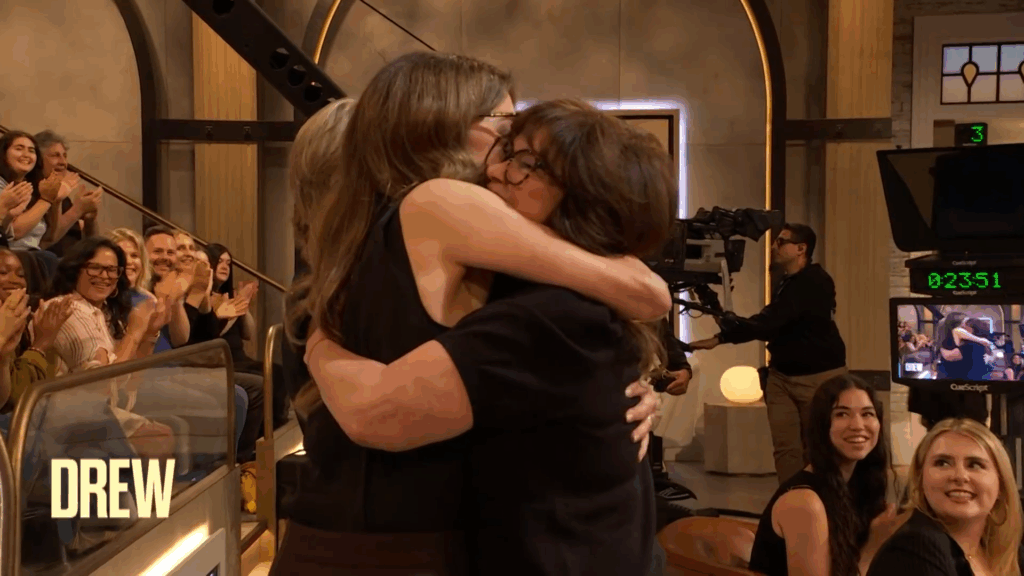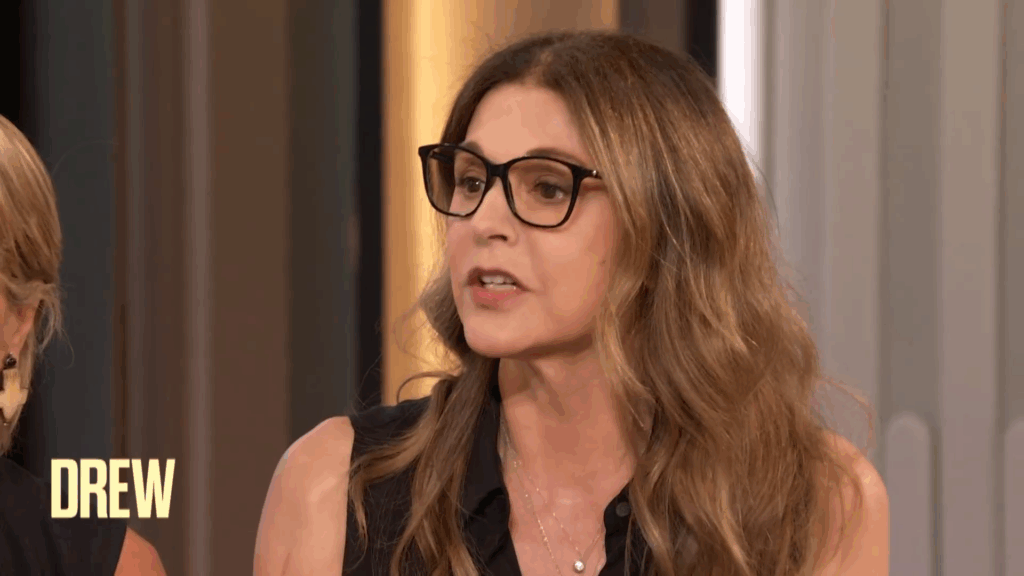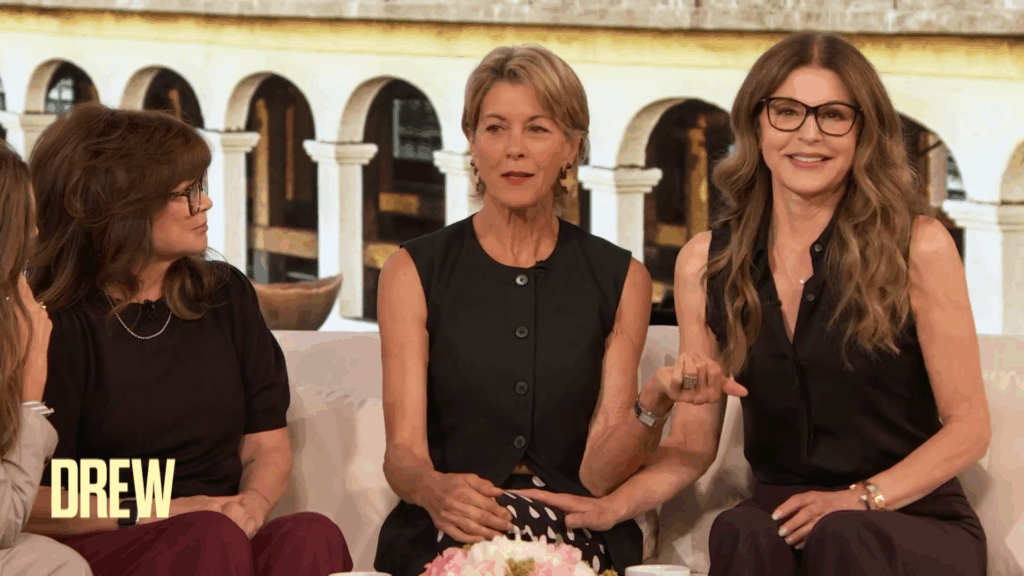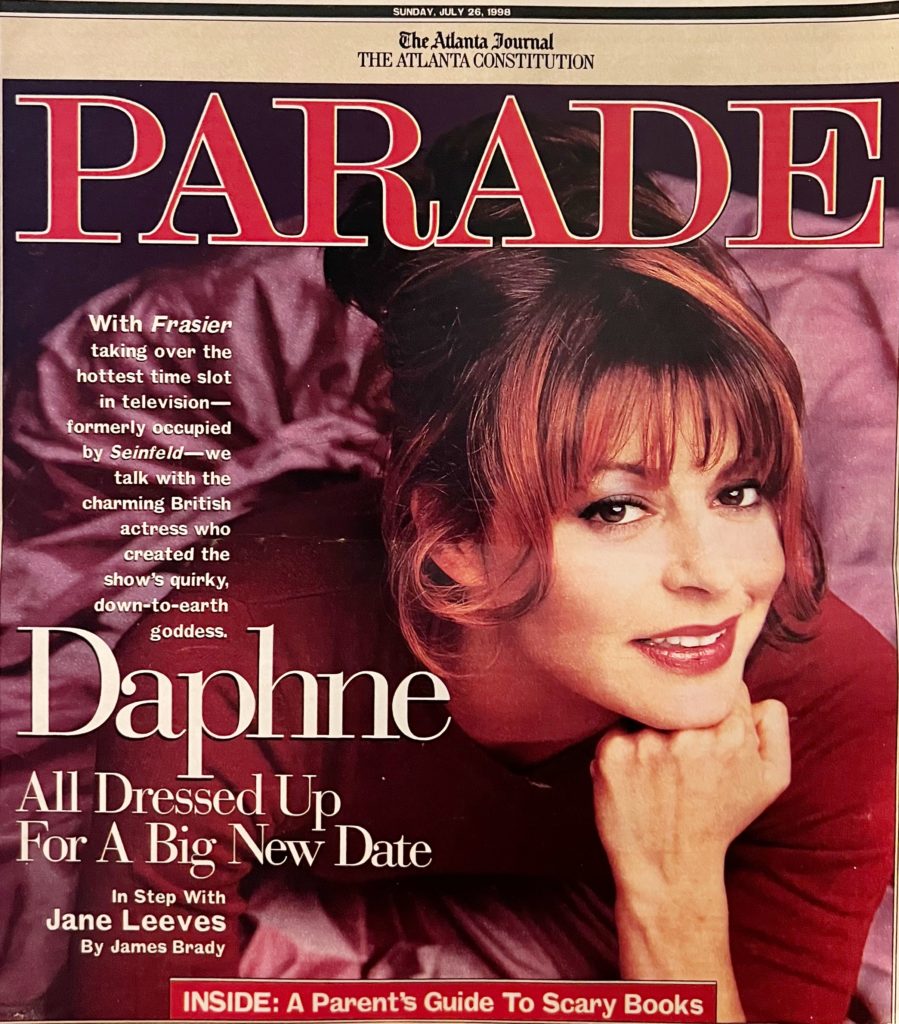

For 11 seasons, the actor Jane Leeves portrayed the character Daphne Moon on the show Frasier. The show was a Cheers spinoff that sent Kelsey Grammer’s title character – a pedantic but sweet psychiatrist – from Boston to Seattle, where he was given a call-in radio show. In the series, Daphne was hired as a live-in physical therapist for Frasier’s father, Martin. But Leeves’ character grew into much more as the series went on, including a budding romance with Frasier’s brother Niles.
While only one of the 264 episodes of the long-running sitcom was actually shot in Seattle, the show and the city remain intertwined. Leeves has a new memoir coming out this fall, called Daphne and Me, that was co-written with her daughter, Isabella Kathryn Coben, who is now an actor and writer herself.
Daphne and Me is out in October. Leeves and her daughter Isabella Kathryn Coben will be at Town Hall Seattle on Oct. 18 to discuss the book.
Listen to the interview here.
Interview transcript
KNKX host Emil Moffatt: So the memoir takes us back to your beginnings in East Grinstead in England, and then you moved to Los Angeles to pursue an acting career, even though you were just starting out in the business. Looking back, how much of a leap of faith was that to move to a new country and pursue an acting career?
Jane Leeves: It was a huge leap of faith, but it was also misguided ignorance. I just thought “I want to be an actor,” and I’d sort of been a dancer in London, and I’d started to do a little bit of acting, but I was still tagged as a dancer who could say a line here and there. So I really wanted to lose that. I did a few American shows and worked with some American choreographers, and they would always say, “You do really well in the states, honey,” and that just sort of kept ringing in my ears. And I was working with an American boy dancer who lived in Los Angeles, and he said, “You know, if you really do want to come to the states, you know, my mum rents out rooms in our house. You could come there.” So that was it, and I just dropped everything and went.
Moffatt: So you were then cast as Daphne on Frasier, and your book takes us behind the scenes with the cast and crew, and you write about how at home everybody felt in this show’s green room. What was it about that space that brought you all so close together?
Levees: When you’re doing TV or a movie, you usually have a trailer, a really nice trailer with a bathroom, and everybody retreats to that when they’re done shooting. But with us we had these crappy little dressing rooms off this little corridor, and thank God, because the dressing rooms were so tiny you wouldn’t sit in there, you know, the walls were cardboard thin, so we used to congregate in the green room. We went through births, deaths, marriages together in that room. Guest stars would come and they’d have a fancy trailer downstairs, but they wanted to be in the green room too, because there was almost always so much life and laughter in there. And I think that had we had trailers, we wouldn’t have bonded the way we did. We were in this little space together, and it forced us to examine each other’s lives every day. And it was a really wonderful thing. I think everyone should have a green room in their life.
Moffatt: What was it about “Frasier” coming off the success of “Cheers” that allowed it to be so successful?
Levees: I think the fact that they changed everything from what Cheers was. We had no music between scenes. There were no exterior shots. He moved all the way from one side of the country to the other. The tone of the show was also very different. It was really a family comedy. It was not a workplace comedy like Cheers was, it became about the family, and I think it was just a really, really smart move.
Moffatt: So you wrote in the book that you don’t like confrontation in real life, and yet for me, many of the most memorable scenes for Daphne in the show involve those confrontations, whether it was with Frasier or whether it was Niles, what did you do to prepare for those scenes?
Levees: The longer you’re with these characters it becomes so real to you that it’s easy after a certain point. Those confrontations always felt personal as well. I remember there was one where Daphne had been sort of sneaking around, looking at one of Niles’ patients, which was an absolute no-no in psychiatry because she [the patient] had a crush on him. And Niles is so disappointed with Daphne, and oh my gosh, that just stung. Niles had never ever seen Daphne other than anything but, you know, with the halo over her head.
Moffatt: The 100th episode of Frasier happened during the fifth season in 1997 and involved Frasier and Niles wandering the actual streets here in Seattle, trying to get to a ceremony at the Space Needle. What do you remember most about that time in Seattle around that episode?
Levees: The writers made a huge discovery though, because it was the first time we’d actually gone out of the Frasier world on stage 25, that the characters looked completely out of place. There was a largeness to them that that sort of was exaggerated when they were put with regular Seattleites wandering around. And after that, whenever we did do something outside, they would tell the extras to actually exaggerate their movements a little bit.
Moffatt: In the process of writing this book with your daughter, what were some of the things that you both learned about each other?
Levees: I think she spent most of her life thinking I was incompetent, and just —- things landed in my lap. I don’t think she realized what a struggle it was for me starting out in the business, and I think she saw a strength in me that she didn’t realize was there. With her, just her extraordinary ability to write, just to give voice to my voice in the writing process. I would write sheets and sheets of paper and then she’d come back with these extraordinary insights into me. There was a story about Elton John in the book. I did a music video with him, and I don’t know why, but, well, it’s Elton John —- that’s why it sticks in my head. But there was something so comforting to me about it, and the editors wanted to nix it. They said, “It doesn’t really go anywhere.” But she said, “Mum, you know you look for Englishness everywhere.” You crave that, because you get homesick when you’re an immigrant. And she wrote the most beautiful passage to make that story sing, and it stayed in the book.
-KNXKG.org